We translate asset strategy into site execution — running accelerated full-scale project management, occupied stabilization, and vacant turn & remodel programs across distressed, pre-foreclosure, and foreclosure multifamily.
Bring us in before the calendar becomes the constraint.
A scoping conversation with the asset team. We read the current operating posture, walk the data you already have, and tell you — in operating language — whether we are the right partner for the timeline you are working under.
A maintenance management partner delivers stabilization that aligns to underwriting.
Faster, more organized, more directed — sequenced to leasing velocity, aligned to the underwriting case, and reported in the language asset managers, receivers, and ICs already read.
- Built for daily maintenance, not capex velocity
- No bandwidth for portfolio-scale turn programs
- Limited construction skill
- Reports in maintenance language, not asset language
- Measured on occupancy & collections, not capex
- Conflicts of interest on vendor selection
- Coordinates vendors — doesn’t manage projects
- Random vendor chaos, no source of truth
- Construction skill at portfolio scale
- Accelerated capex and turn timelines
- No vendor conflicts — single accountable team
- Lender-, receiver-, IC-ready reporting
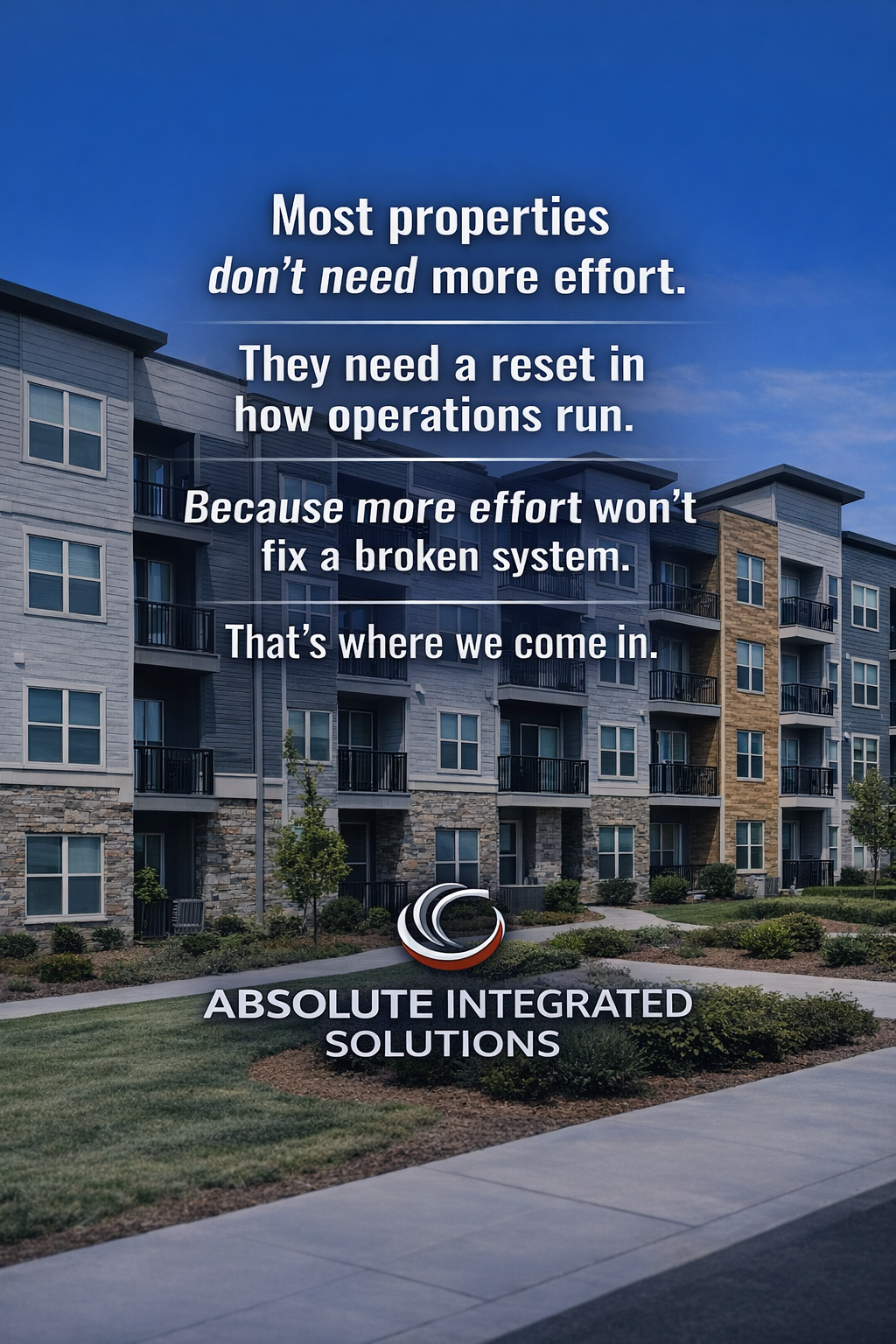
Stabilization problems we solve under lender, receiver, and IC timelines.
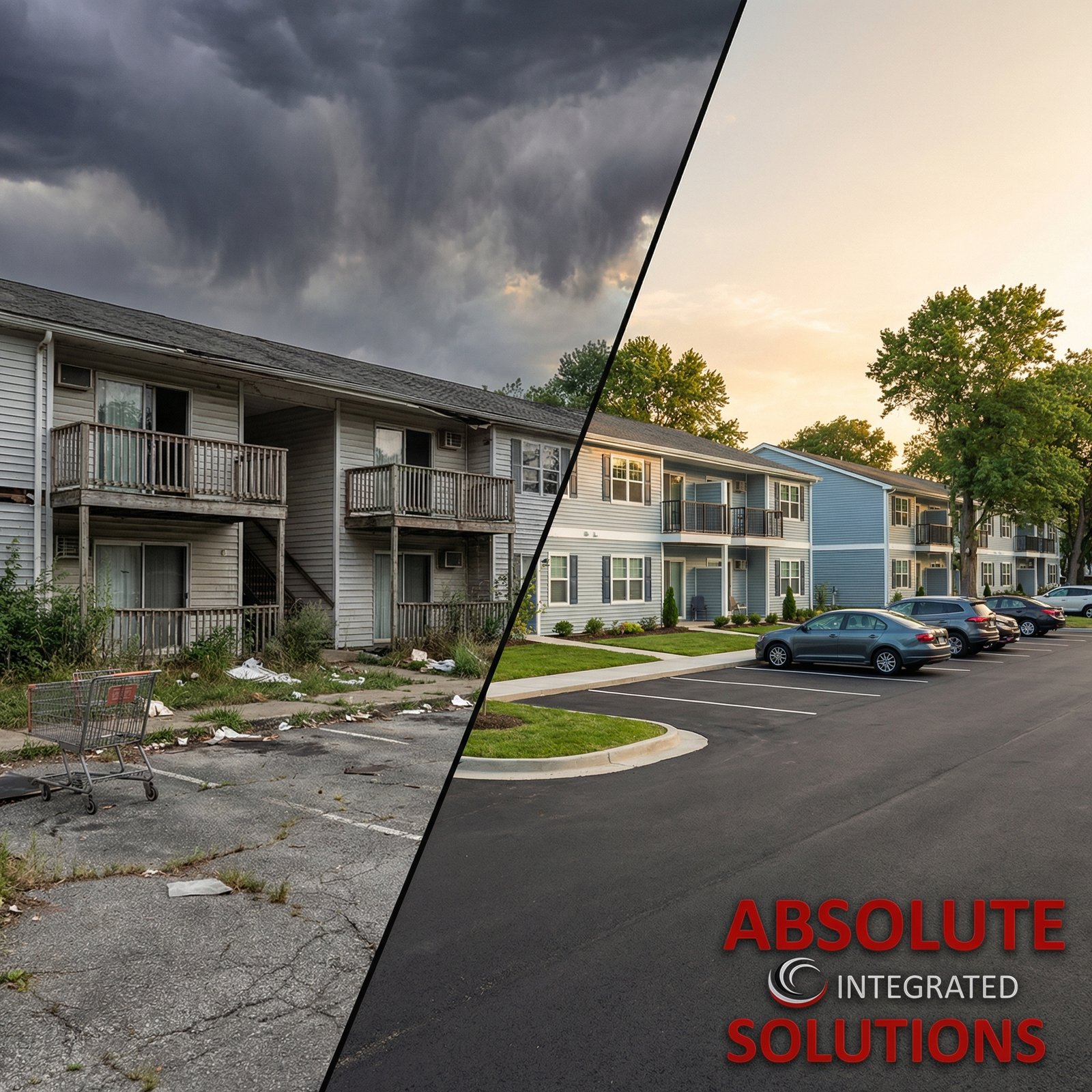
Stalled Unit Turns
Large-volume vacant turn pipelines that have slipped against the lease-up curve and need execution velocity restored.
Underperforming Occupancy
Occupied stabilization, deferred maintenance close-out, and life-safety work executed around in-place residents.
Capital Plan Drift
Capital improvement needs assessment realigned to underwriting — produced before the LOI, IC memo, or workout filing.
Reporting Gaps
Lender-, receiver-, and IC-ready documentation that holds in a workout, hearing, or disposition data room.
Three questions before any scope enters production. Six inputs we pull inside the first seven days.
Does this scope match the rent the asset is positioned to achieve?
Does this scope match the resident profile the asset is positioned to attract?
Does this scope match the hold period the asset is underwriting toward?
If any answer is uncertain, the line item is a position — not a decision.
Work Order History
Last 90 days of work orders, organized by unit — not by building — to expose pattern, severity, and unresolved scope.
Rent Roll Reconciliation
Current rent roll reconciled against turn pipeline, unit-level inspection notes, and physical-vs-economic occupancy.
Operating Budget Data
YTD operating budget against the underwriting case — not prior year — with maintenance variance mapped line by line.
Compliance Documentation
Inspection completeness, life-safety records, code citations, and any open regulatory or lender covenant requirements.
Capital Improvement Needs Assessment
Unit-level and building-level capital needs scored against rent thesis, resident profile, and hold-period assumptions.
Leasing & Market Data
Submarket lease-up curve, comparable rents, days-to-rent benchmarks, and concession trend — sequenced to inform turn pacing.
A stabilization cadence built for externally-set multifamily timelines.
Diagnose
Asset walk; current-state scope baseline; unit-level inspection with photographic evidence; named accountabilities mapped; capital estimate produced against the underwriting case.
Lock
Turn calendar synchronized to leasing pipeline; scope locked to the rent-resident-hold thesis; weekly reporting cadence established; field operations aligned to one source of truth.
Compound
Predictable execution week over week; lender-, receiver-, and IC-ready reporting; variance against underwriting becomes the default metric.
Full-scale project management and turnaround execution.
Large-Volume Unit Turn Management
Portfolio-scale turn cycles sequenced to the lease-up curve, with field-led execution and one source of truth.
Occupied Unit Stabilization
Deferred maintenance close-out, life-safety remediation, and in-place renovation executed around residents.
Vacant Turn & Remodel Programs
Standardized turn scopes calibrated to the rent-resident-hold thesis — not the lowest-cost finish.
Distressed Asset Stabilization
Operational triage for receivership, special servicing, and pre-foreclosure workout assets.
Foreclosure & REO Operating Setup
Stand-up of the operating cadence post-foreclosure for disposition, recapitalization, or long-hold.
Capital Needs Assessment
Unit-level capital improvement needs assessment produced against the underwriting case.
Leasing Strategy Coordination
Turn calendar synchronized to leasing pipeline, marketing release, and rent-ready dates.
On-Site Field Operations
Daily field ops, scope close-out, and unit-tagged photographic evidence on every walk.
Lean Six Sigma Process Discipline
Lean Six Sigma methodology applied to turn intake, scoping, execution, and close-out.
Compliance Documentation
Defensible documentation for audits, workout memos, court updates, and disposition files.
Operating Budget Realignment
Operating budgets reframed against the underwriting case — not against prior year.
Lender-, Receiver-, IC-Ready Reporting
Variance against underwriting becomes the asset team’s default metric.
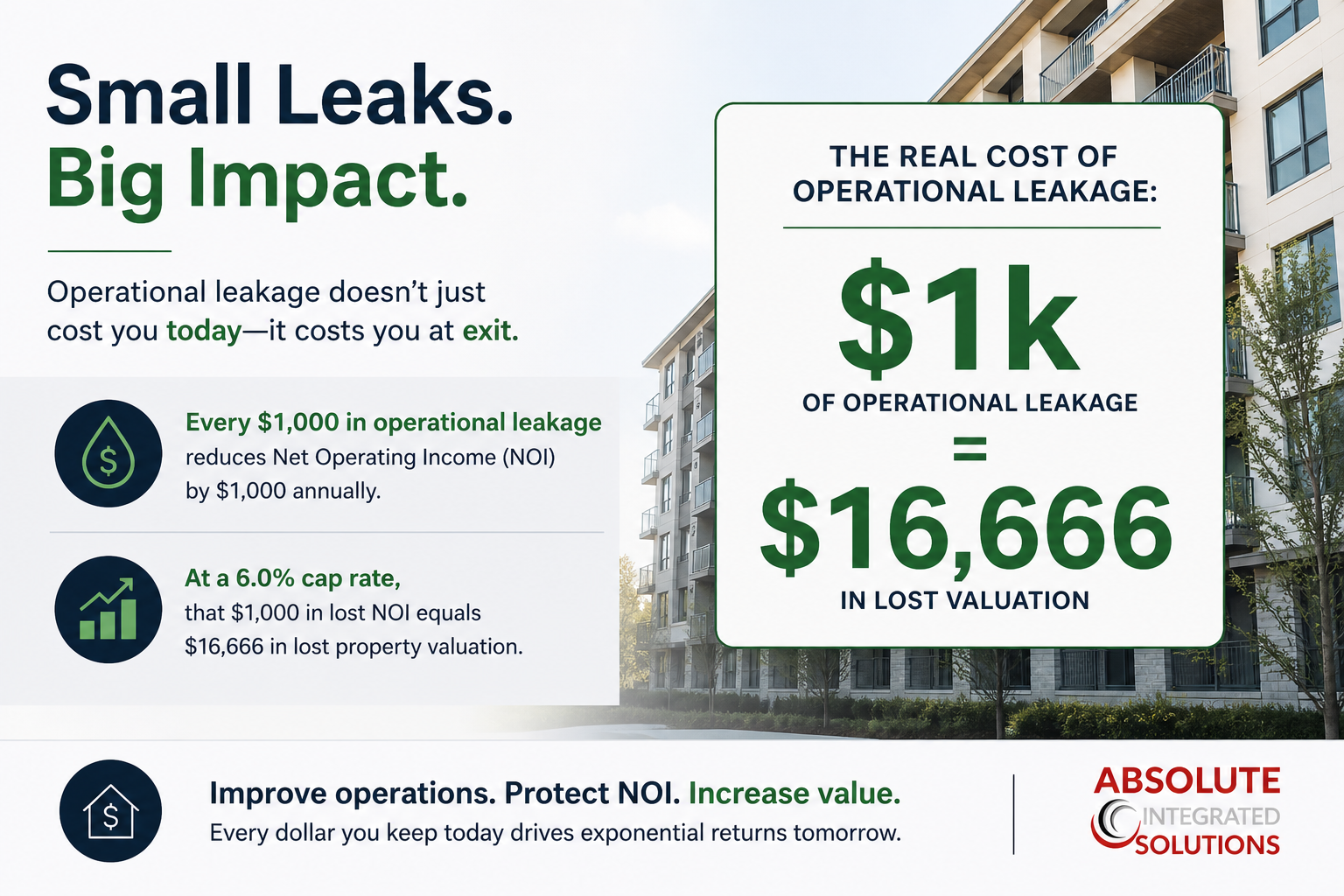
We stabilize properties with less operational waste — coordinated between ownership and property management.
Every dollar of operational leakage compounds against NOI today and valuation at exit. The lift comes from operating posture: tighter execution at the site, cleaner coordination between the asset manager and the property manager, and fewer hand-offs that lose money in the gap.
Translating asset strategy into site execution.
Property management coordinates day-to-day site tasks. We run full-scale project management and turnaround execution.
- Resident relationship & retention
- Leasing pipeline and lease execution
- Day-to-day site task coordination
- Rent collection and resident communication
- Full-scale project management of the stabilization program
- Turnaround execution strategy across occupied and vacant scope
- Lean Six Sigma process implementation
- Operational alignment between asset management and site operations
Built for the parties accountable for the stabilization outcome.
We work directly with asset-level decision makers. Engagements run alongside the existing property management team.
What receivers, lenders, and sponsors ask before the first walk.
Is this another property management offering?
No. Property management coordinates day-to-day site tasks and the resident relationship. We run full-scale project management and turnaround execution.
Do you handle occupied stabilization, vacant turn / remodel, or both?
Both, on the same engagement — sequenced together against the lease-up curve.
What kinds of stabilization timelines are typical?
Timelines are set by the asset — covenant cure windows, refinance dates, court-ordered milestones, IC commitments, disposition calendars. We build the operating plan against the timeline already on the asset.
Where do you operate?
Ohio, the broader Midwest, the East Coast, and the Sunbelt — headquartered in Central Ohio with field-led mobilization across those markets.
How do we start a conversation?
Schedule an asset review. A short call, an asset walk where the timeline warrants it, and an honest read on whether the operating posture matches the stabilization arc the asset is on.