Mold Remediation Done Right: Grey Water vs Black Water : and Why Drywall & Carpet Always Have to Go
Mold is not a cleaning project. Mold does not care whether you are a homeowner in Dublin or a landlord managing 50 units. If you own a home or manage a property and treat a moisture intrusion event like a simple "bleach and paint" task, you are actively devaluing your asset. In the world of property maintenance, ignorance is expensive. Every hour a wet porous surface remains in your home or unit, your liability grows while your property value, home equity, and Net Operating Income (NOI) take the hit.
Effective mold remediation in Columbus, Ohio, requires more than just a shop vac and a fan. It requires a clinical understanding of water categories, microbial amplification, and the physical properties of building materials. You cannot "clean" mold out of a sponge. And in a house, condo, or residential unit, your drywall and carpet are exactly that: giant, structural sponges.
The Taxonomy of Water Damage: Categories Matter
The industry follows the IICRC S500 standard for a reason. Water damage is categorized not by its color, but by its level of contamination. Understanding these categories is the difference between a successful restoration and a catastrophic health liability.
Category 1: Clean Water
This is water from a broken supply line or a bathtub overflow. While it starts "clean," it doesn't stay that way. Within 24 to 48 hours, Category 1 water typically degrades into Category 2 as it reacts with floor finishes, dust, and structural materials.
Category 2: Grey Water
Grey water contains a significant degree of chemical, biological, or physical contamination. Think of a dishwasher leak, a washing machine overflow, or a toilet bowl splash-over (urine only).

Category 3: Black Water
Black water is grossly unsanitary. This is sewage, rising floodwaters from rivers, or any water that has been standing long enough to support heavy microbial growth. Black water contains pathogens, bacteria, and fungi that are hazardous to human health.
The Rule: If it’s Category 3, there is no debate. Everything porous it touches must be removed.
Why Drywall and Carpet Always Have to Go
The single most common mistake in rental maintenance and residential water loss response is the attempt to "save" wet drywall or carpet. From a financial perspective, this is a high-interest debt that will eventually come due. For homeowners, it also creates health risks for your family, jeopardizes home equity, and can surface later during resale or inspection.
The Physics of Porosity
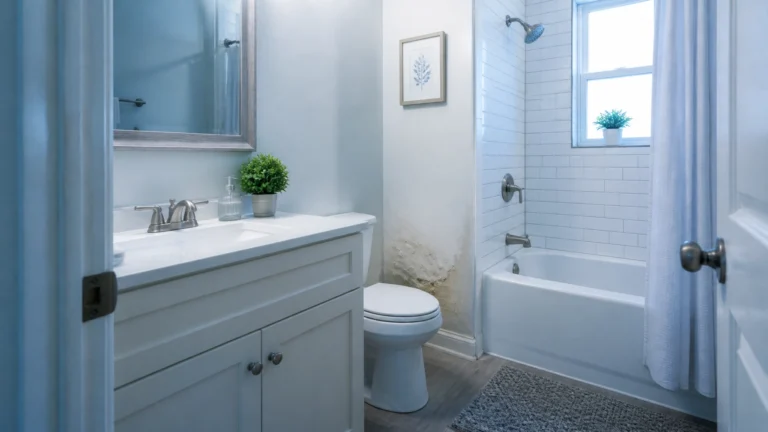
Drywall (gypsum board) is highly porous. When it absorbs water: especially Category 2 or 3: the moisture doesn't just sit on the surface. It travels through the core and wicks up the wall, often several inches above the visible water line.
Once the paper backing of the drywall is wet, it becomes a food source for mold spores. You can spray the front with as much antimicrobial as you want; the mold is growing on the back side, hidden in the wall cavity, feeding on the paper and the wooden studs.
The Carpet Trap
Carpet and the underlying pad act as a filter. They trap skin cells, dust, pet dander, and dirt. When these "filters" get wet, they become the perfect laboratory for microbial growth.
- Carpet Pad: This is essentially a foam sponge. It is impossible to fully disinfect a carpet pad that has been saturated with Category 2 or 3 water.
- The Subfloor: Leaving wet carpet in place traps moisture against the subfloor, leading to wood rot and structural failure.
If you don't remove the carpet and pad immediately, you aren't "saving money": you're incubating a problem that will eventually require a full-scale water damage repair and potentially a total gut of the room. For a homeowner, that means avoidable disruption, indoor air quality concerns, reduced resale value, and the kind of issue that can derail a home inspection.

The 48-Hour Window: Why Speed is Your Only Defense
In the humid climate of Central Ohio, the clock is your enemy. Microorganisms don't wait for your insurance adjuster to show up. They begin to colonize within 24 to 48 hours of the initial moisture event.
- Phase 1 (0-24 Hours): Water spreads, wicking into drywall and soaking into carpet.
- Phase 2 (24-48 Hours): Microbial amplification begins. Odors start to develop. Category 1 water becomes Category 2.
- Phase 3 (48+ Hours): Visible mold growth. Structural materials begin to lose integrity. Category 2 water is now Category 3.
Every day you delay professional property maintenance management or restoration response increases the final bill by 15-20%. For homeowners, that delay also increases the risk of mold exposure for your family and drives down the value of one of your largest assets. Inaction is a choice to lose money.
Professional Remediation: The Absolute Process
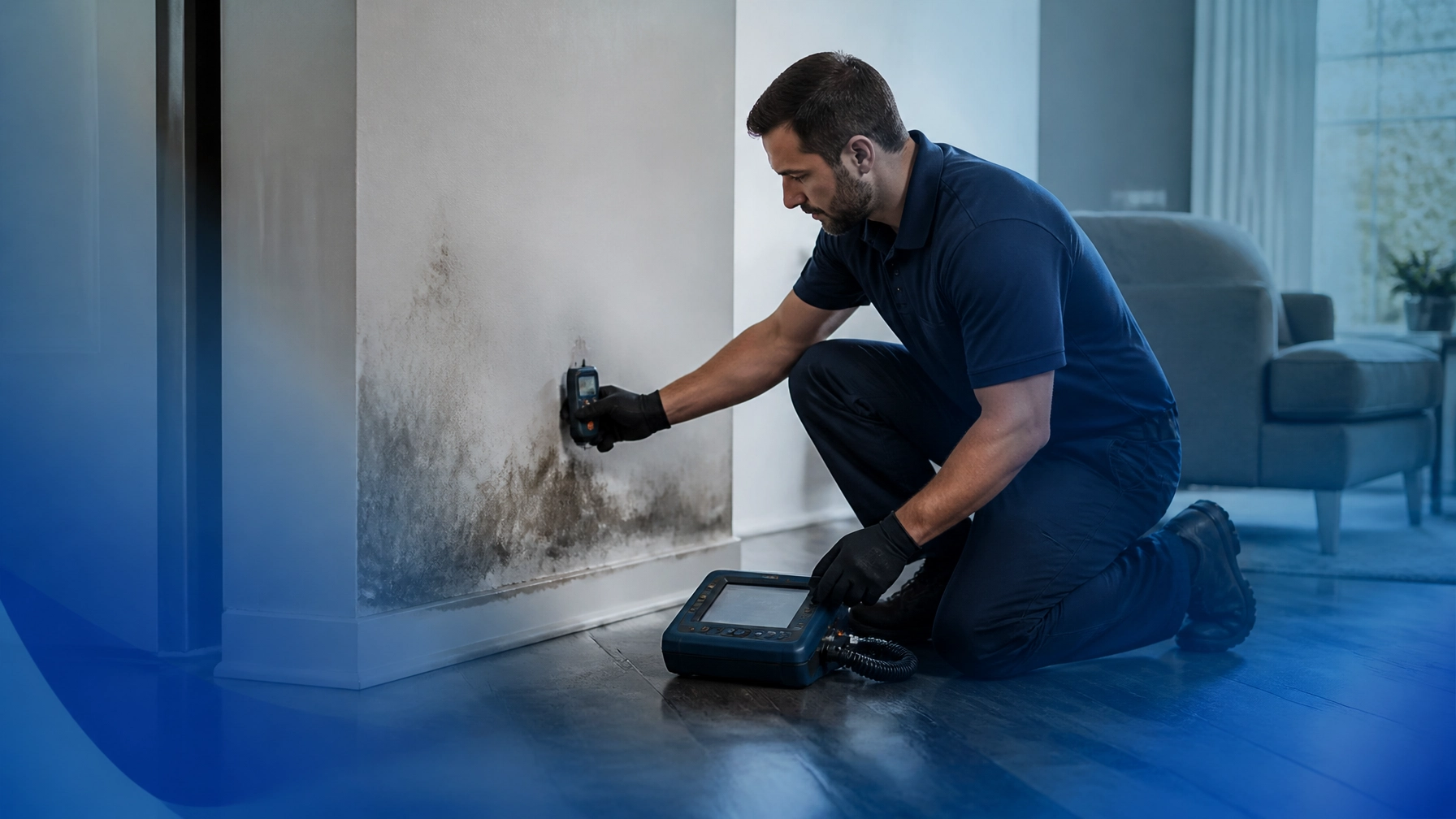
We don't "guess" if something is dry. We measure it. Our team uses professional-grade moisture meters and thermal imaging to find the water that your eyes can't see.

Containment and Removal
Before any demolition starts, we establish containment. We use 6-mil plastic sheeting and HEPA air scrubbers to create negative air pressure. This prevents mold spores from hitching a ride on your HVAC system and spreading to the rest of the property.
- The Flood Cut: We don't just cut out the wet spot. We perform a "flood cut" 12 to 24 inches above the highest moisture reading to ensure we’ve removed every inch of contaminated material.
- HEPA Vacuuming: Once the porous materials are gone, we HEPA-vac all remaining hard surfaces to remove settled spores.
- Antimicrobial Treatment: We apply EPA-registered antimicrobials to the remaining structural framing to prevent future growth.
The Liability of the "Handyman Special"
Many owners make the mistake of trying to save a few dollars by treating a leak as a basic handyman cleanup. This is a massive legal, health, and financial risk.
If your family develops respiratory issues, if a tenant raises a habitability complaint, or if a future buyer finds hidden mold during a home inspection, the "savings" of painting over the mildew vanishes.
Structural Integrity vs. Aesthetic Repair
Forget about how it looks for a second. Let's talk about how it works. When we handle a restoration, we aren't just looking to put up new paint. We are looking to ensure the structural "bones" of the property are dry.
Leaving moisture in the sills or the baseplates of your walls will lead to:
- Dry Rot: Weakening the structural load-bearing capacity of the building.
- Pest Infestation: Damp wood is a magnet for termites and carpenter ants.
- Persistent Odors: That "old building smell" is usually just the smell of slow-decaying organic matter hidden behind the walls.

Conclusion: Protect Your ROI by Doing it Once
The math is simple. You can pay for a professional remediation once, or you can pay for a "cleaning" now and a full gut-and-rebuild in six months when the mold returns.
In the Columbus market, moisture issues are expensive no matter what you own. For investors and property managers, they lead to higher vacancy rates and lower valuations. For homeowners, they threaten your family's health, your home equity, your resale position, and your ability to pass inspection cleanly. Absolute Integrated Solutions handles the entire lifecycle: from the initial extraction and "tear-out" to the final drywall finish and painting.
We don't just fix the damage; we stabilize your asset. Stop bleeding money on temporary fixes and start investing in professional property care.