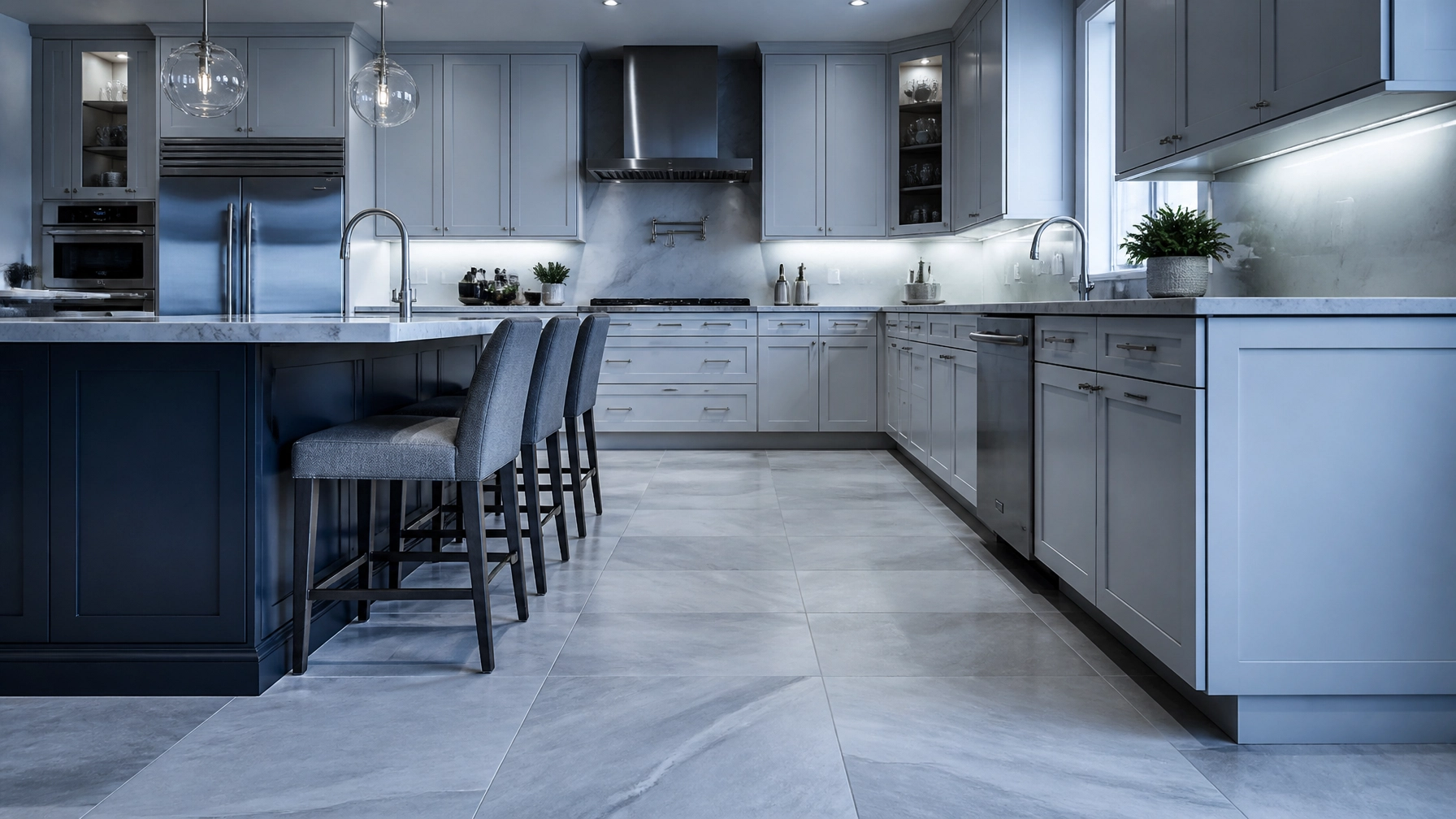
Kitchen Remodeling: Why Tile Flooring and Proper Waterproofing Beat LVP Every Time
Luxury Vinyl Plank (LVP) is the industry's most successful marketing pivot of the last decade. It has been branded as "waterproof," "indestructible," and "DIY-friendly": a triple threat that has led thousands of homeowners and property managers to choose plastic over stone. In the world of high-performance kitchen remodeling in Columbus, Ohio, this trend is beginning to show its cracks.
Surface-level water resistance is not the same as structural waterproofing. When you choose LVP, you are essentially installing a floating plastic floor over a vulnerable subfloor. When you choose porcelain or ceramic tile with a professional bonded waterproofing system, you are installing an architectural asset. For those focused on long-term ROI and structural integrity, the choice is clear. Tile is not just an aesthetic upgrade; it is a moisture-management strategy.
The Waterproofing Fallacy: Why LVP Fails Behind the Scenes
The "waterproof" label on a box of LVP refers only to the plank itself. It does not refer to your home. While the vinyl may not swell when exposed to moisture, the gaps between the planks, the perimeter of the room, and the transitions under your cabinets remain vulnerable.
Every kitchen has three primary failure points: the dishwasher, the refrigerator ice line, and the kitchen sink. When a leak occurs in these areas, water does not sit on top of the LVP waiting to be mopped up. It follows the path of least resistance, seeping through the click-lock seams and under the baseboards. Once water is trapped between a non-breathable plastic floor and a wooden subfloor, you have created a perfect incubator for mold and structural rot.

The Bonded Membrane Advantage
A professional tile installation at Absolute Integrated Solutions utilizes a bonded waterproofing system, such as a Schluter-DITRA or Wedi assembly. We don’t just lay tile; we create a continuous, uncoupling, and waterproof layer that separates the tile from the subfloor.
- Vapor Management: These systems allow moisture from the subfloor to escape through air channels, preventing the rot often seen under LVP.
- Uncoupling: The membrane allows the subfloor and the tile to move independently, eliminating the primary cause of cracked grout and tiles.
- True Waterproofing: When the seams of these membranes are sealed, the floor becomes a literal basin. If your dishwasher leaks, the water stays on top of the system where it can be managed, rather than destroying your joists.
Material Science: Porcelain vs. Plastic
The durability of LVP is often overstated. While the "wear layer" protects against minor scratches, it is still a soft material. Dragging a heavy appliance, such as a refrigerator or range, can easily gouge vinyl. High heat from a dropped pan or even prolonged exposure to direct sunlight through a sliding glass door can cause LVP to warp or "cup."
Porcelain and ceramic tiles are fired at temperatures exceeding 2,000 degrees Fahrenheit. They are chemically inert, meaning they do not off-gas VOCs, and they are physically impervious to the heat, grease, and heavy traffic typical of a Central Ohio kitchen.

The Maintenance Reality
LVP proponents argue that tile is harder to maintain because of grout. This is an outdated perspective. Modern epoxy and high-performance cementitious grouts are stain-resistant and do not require the frequent sealing of 1990s-era materials. When properly installed, a tile floor is a 50-year solution. LVP is a 7-to-10-year solution before the click-lock edges begin to fail or the aesthetic becomes dated.
Financial Modeling: The Real Kitchen Remodel Cost in Columbus, Ohio
When evaluating a kitchen remodel cost in Columbus, Ohio, you must look beyond the initial invoice. In 2026, the average kitchen remodel in the Central Ohio market ranges from $20,000 to $60,000. Flooring typically accounts for 7% to 10% of that budget.
While LVP may cost $4 to $7 per square foot installed, and professional tile installation can range from $12 to $20 per square foot, the amortized cost of tile is significantly lower.
| Metric | Luxury Vinyl Plank (LVP) | Porcelain Tile (Waterproofed) |
|---|---|---|
| Initial Cost (200 sq ft) | $1,200 – $1,600 | $2,800 – $4,500 |
| Estimated Lifespan | 8 – 12 Years | 40 – 50 Years |
| Cost Per Year | ~$133 / year | ~$75 / year |
| Risk of Subfloor Damage | High | Negligible |
| Property Value Impact | Neutral | High (Premium Aesthetic) |
Every day a unit sits vacant because of a failed floor or a mold remediation project is lost revenue that can never be recovered. For property managers and landlords, the "savings" of LVP are often wiped out by a single refrigerator line leak. We view flooring not as a cosmetic choice, but as a risk-mitigation strategy for your real estate portfolio.
Strategic Cabinetry: Kitchen Cabinet Refacing vs. Replacement
The flooring decision also dictates your cabinetry strategy. If you are investing in a 50-year tile floor, you must ensure your cabinets are equally durable. This leads to the common debate: kitchen cabinet refacing vs. replacement.
At Absolute Integrated Solutions, we analyze the structural integrity of your current cabinet boxes before recommending a path.
- Cabinet Refacing: If your current boxes are solid wood or high-quality plywood (common in older Columbus homes), refacing is the superior ROI move. We replace the doors and drawers with new, modern styles and apply a matching veneer to the boxes. This provides the look of a $30,000 custom kitchen at roughly 40% of the cost.
- Full Replacement: We only recommend full replacement if the current layout is functionally broken or if the boxes are made of failing particle board.
Integrating a high-end tile floor with refaced solid wood cabinets creates a kitchen that is both aesthetically modern and structurally superior to "new" kitchens built with modern, thin-walled MDF cabinets.

The AIS Difference: One-Stop Integration
Most homeowners in Columbus find themselves acting as a part-time project manager, trying to coordinate a flooring guy, a cabinet guy, and a plumber. This fragmentation is where mistakes happen. A flooring contractor won't care if the plumber didn't properly seal the dishwasher line; they just lay the planks and leave.
Absolute Integrated Solutions operates as a core part of your team. We manage the project from end to end: from the initial water damage assessment to the final bead of silicone. With over 25 years of experience in the Columbus market, we understand the local climate, the common failure points of Ohio subfloors, and the specific needs of property managers.
We don't just provide services; we provide parent accounts and customer portals so you can track your remodel's progress in real-time. Our goal is to eliminate the "bid process" through transparent, contract-based pricing that allows you to move faster and with more confidence.

Conclusion: Stop Chasing the "Cheap" Option
Cheap flooring is a high-interest debt that eventually comes due. Whether you are a homeowner looking to increase your equity or a property manager looking to reduce maintenance overhead, porcelain tile with a bonded waterproofing system is the only logical choice for a kitchen.
Forget the "waterproof" plastic claims. Invest in materials that can actually withstand a flood, a fire, and forty years of traffic.
Ready to upgrade your property with a high-performance kitchen remodel? Request a Portfolio Maintenance Review or a Residential Consultation today.